New York Tech Week broke my routine, so I built an autonomous health tracker
A stressful week of dieting, networking, and work exposed how fragile my health routine had become, so I built a system that reduced decision fatigue and made accountability easier.
New York Tech Week was the moment I realized my routine was being held together by too much effort.
I was trying to balance dieting, networking, work, movement, and the pressure of showing up well in every room. None of it was impossible on its own. Together, it created enough friction that staying in shape started to feel like another system I had to manually manage.
There is something a little Pyrrhic about that kind of week. A Pyrrhic victory is a success that comes at such a high cost that it differs little from defeat. That was what the week revealed to me. Even if I was doing well professionally, meeting the right people, and building momentum, losing ground in my health, energy, and routine did not feel like winning.
That was the trigger.

I did not need better health advice. I needed a system that could keep up when my attention was already stretched thin.
What was breaking
The issue was not motivation. It was fragmentation.
Every part of the process lived somewhere else. Weight was in one place. Movement and caloric expenditure were in Apple Health. Visual progress was separate. Reflections and interpretation lived in my head. The result was that staying accountable required too many tiny acts of coordination.
Individually, none of those tasks were hard. Together, they created enough friction to make consistency feel fragile.
That became especially obvious during Tech Week. When your days are packed with meetings, events, commuting, meals out, and social pressure, health tracking starts to compete with everything else for attention. And attention is usually the first thing to go.
What I built
So I built a personal system around the things I was already doing, not the idealized version of what I thought I should do.
The first Apple Shortcut reads health data from Renpho. The second Apple Shortcut automates the transfer of that data from Apple Health into Notion through an API-based flow. Apple's Shortcuts app supports automations that can run on a schedule and send data with a "Get Contents of URL" action, which is the backbone that makes this kind of handoff possible.
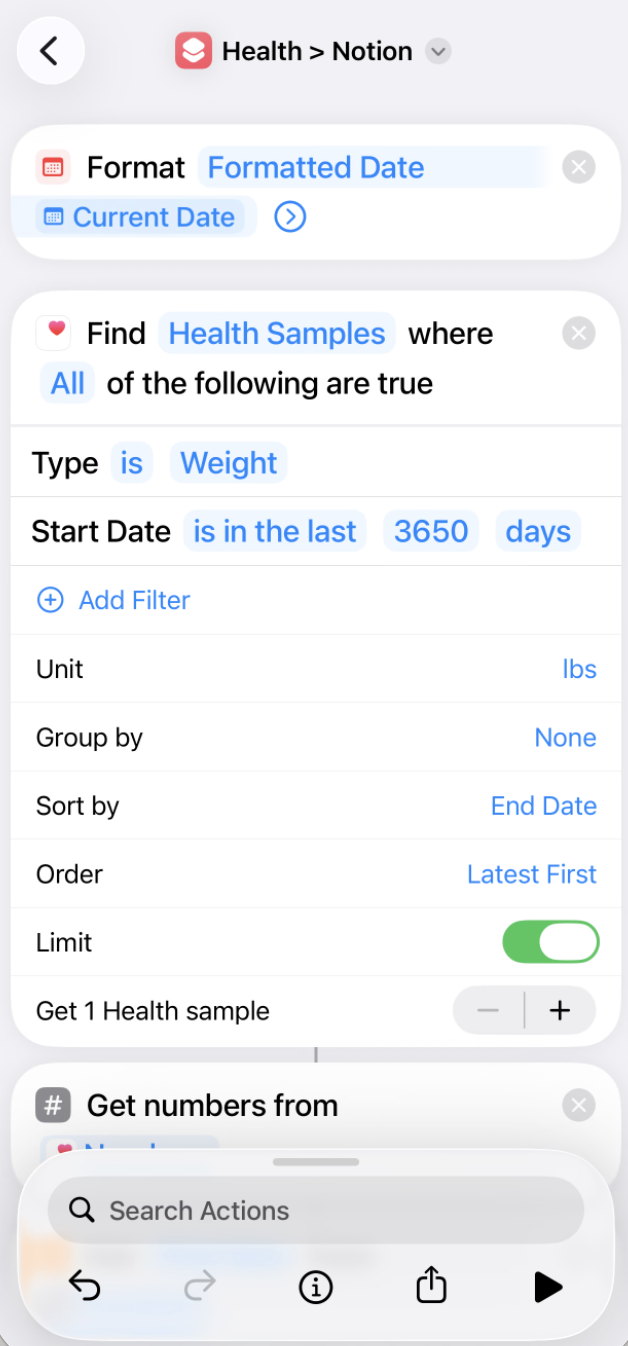
Notion's API is built to connect pages and databases to external tools, which made it a useful destination for turning scattered health inputs into a single running record.
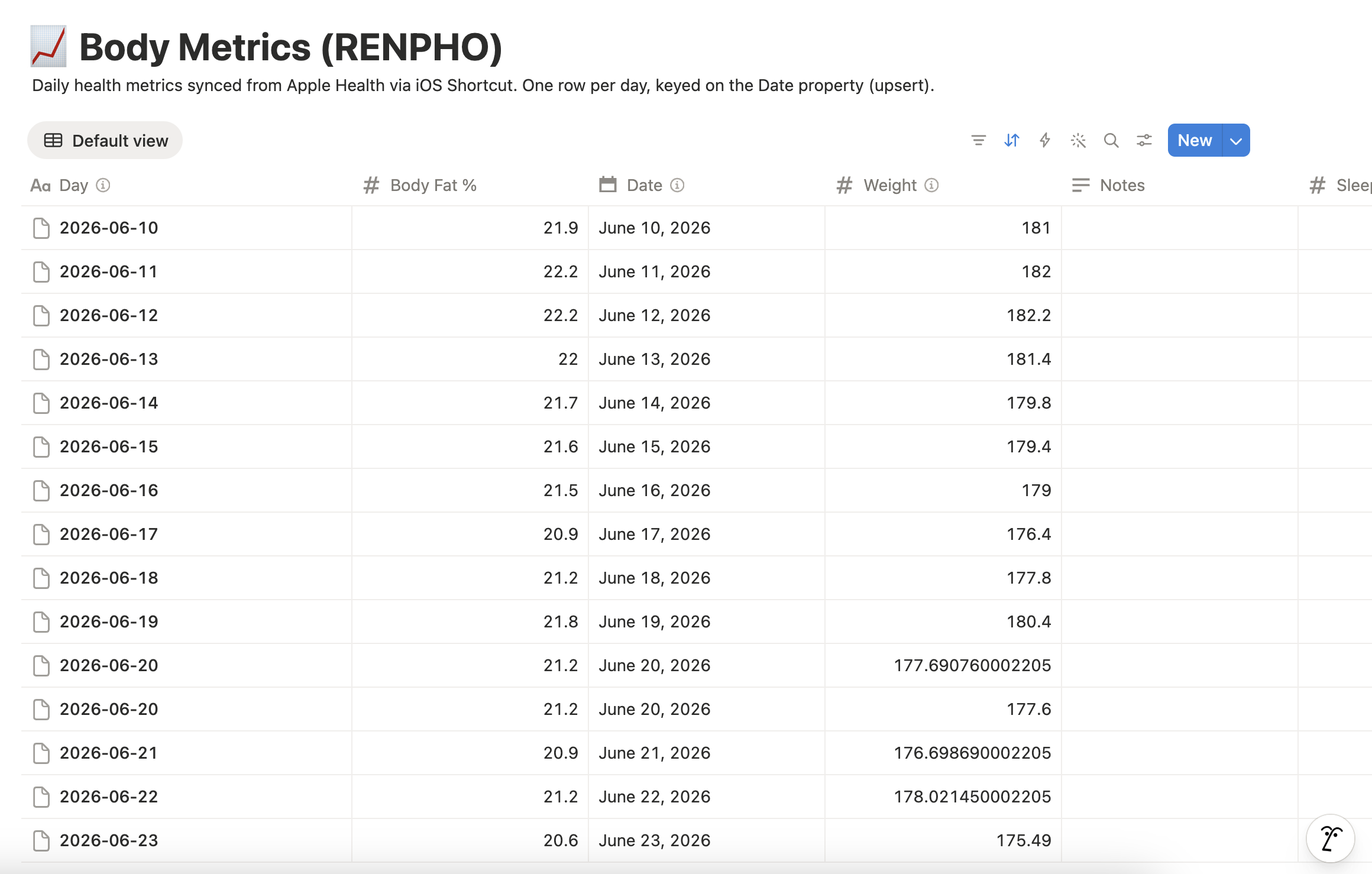
The rest of the workflow is more personal than technical.
Each morning, I take a photo of my body at the same time before eating anything so the comparison stays as consistent as possible. ChatGPT has a prompt that frames the task like a skilled personal trainer assessing a baseline, looking for changes in body composition, definition, and overall progress. Claude then condenses those observations into Notion so the system becomes less about isolated check-ins and more about a continuous log.
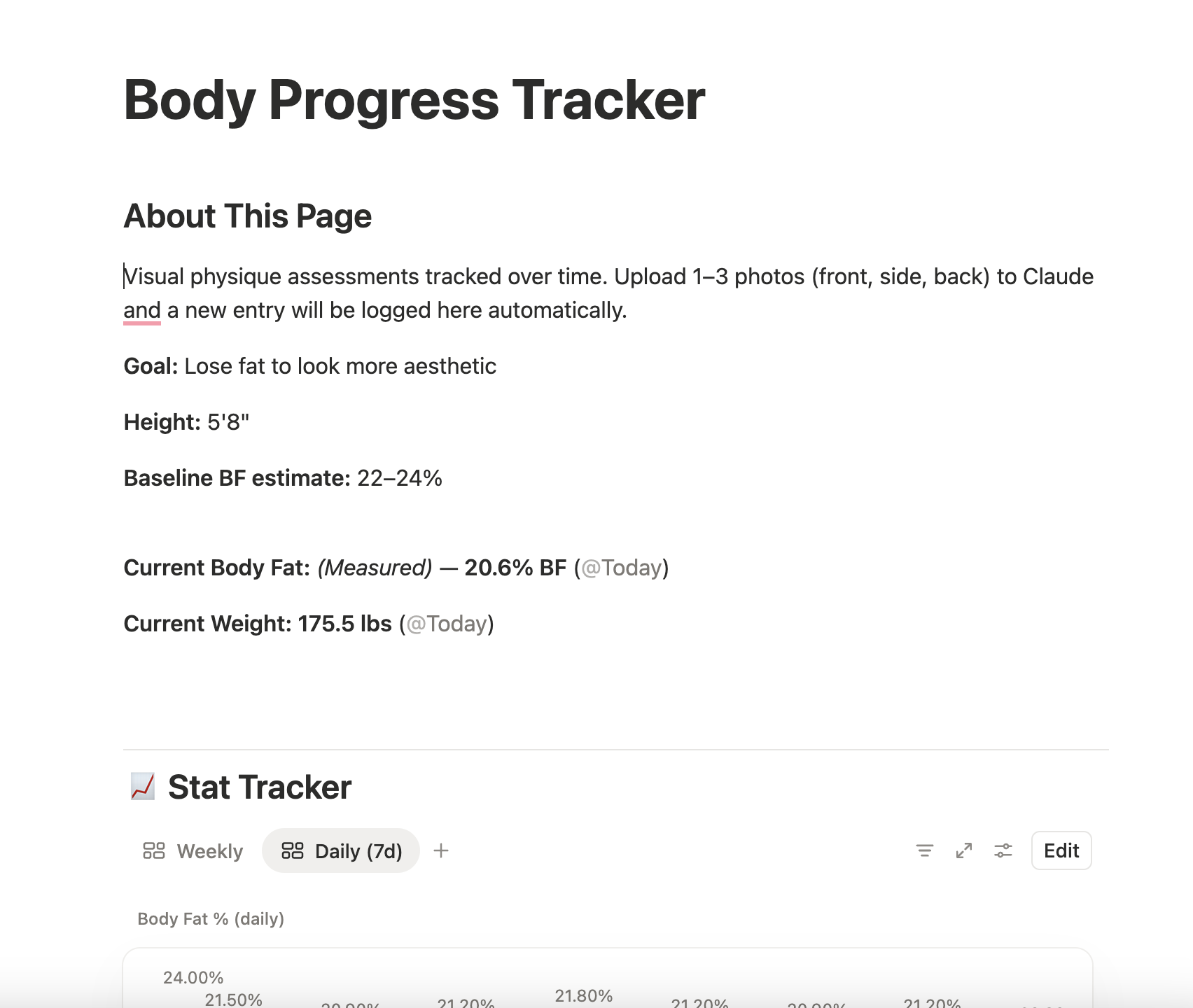
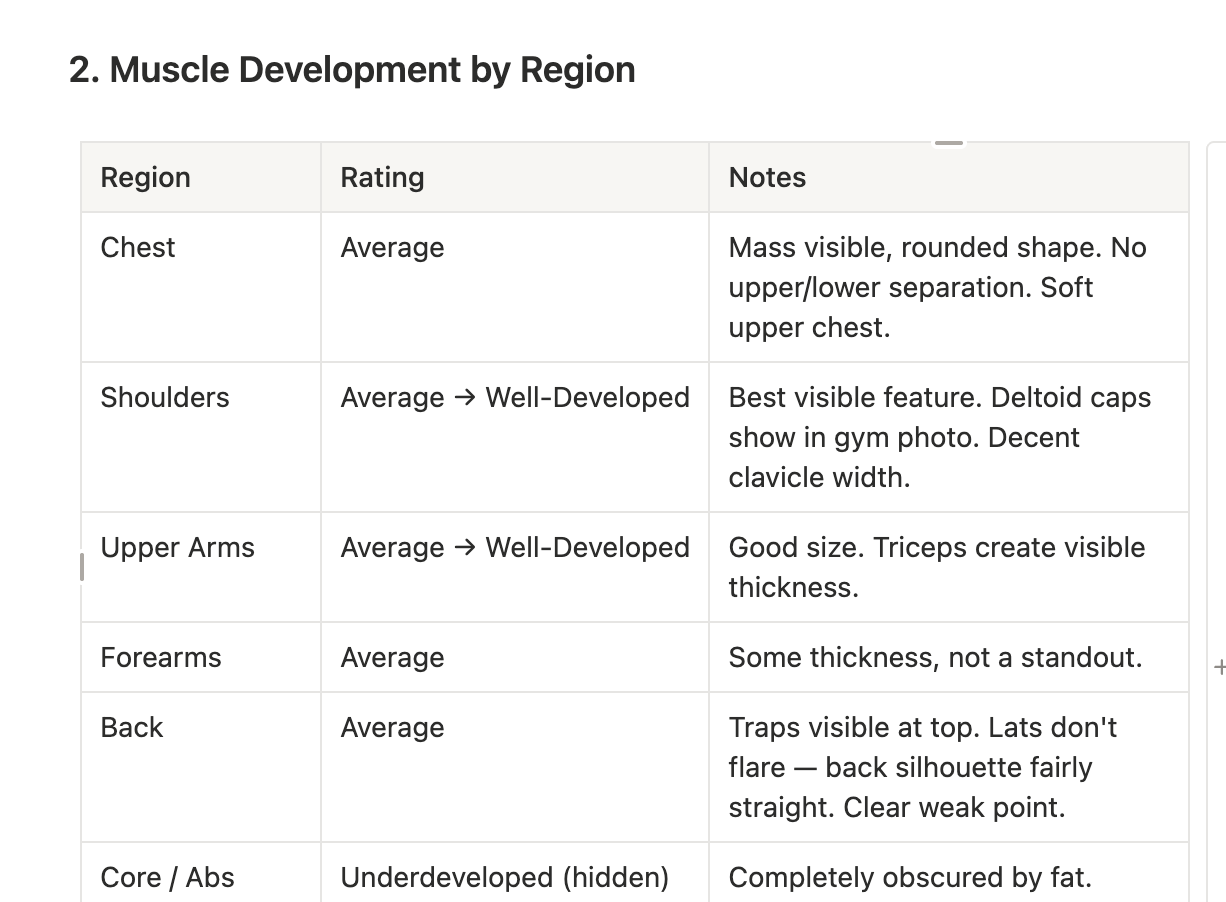
That is the part that made the project click for me.
The build itself is not complicated enough to be impressive on its own. What mattered was that it brought a few scattered behaviors into one place where they could actually reinforce each other.
The small teardown
If I strip away the personal layer, the system is doing a few simple jobs.
- It captures objective signals, like weight, movement, and caloric expenditure.
- It captures visual signals, like daily progress photos.
- It uses AI twice, once to observe and once to condense.
- It sends everything into Notion so the record has continuity.
That is the whole shape of it.
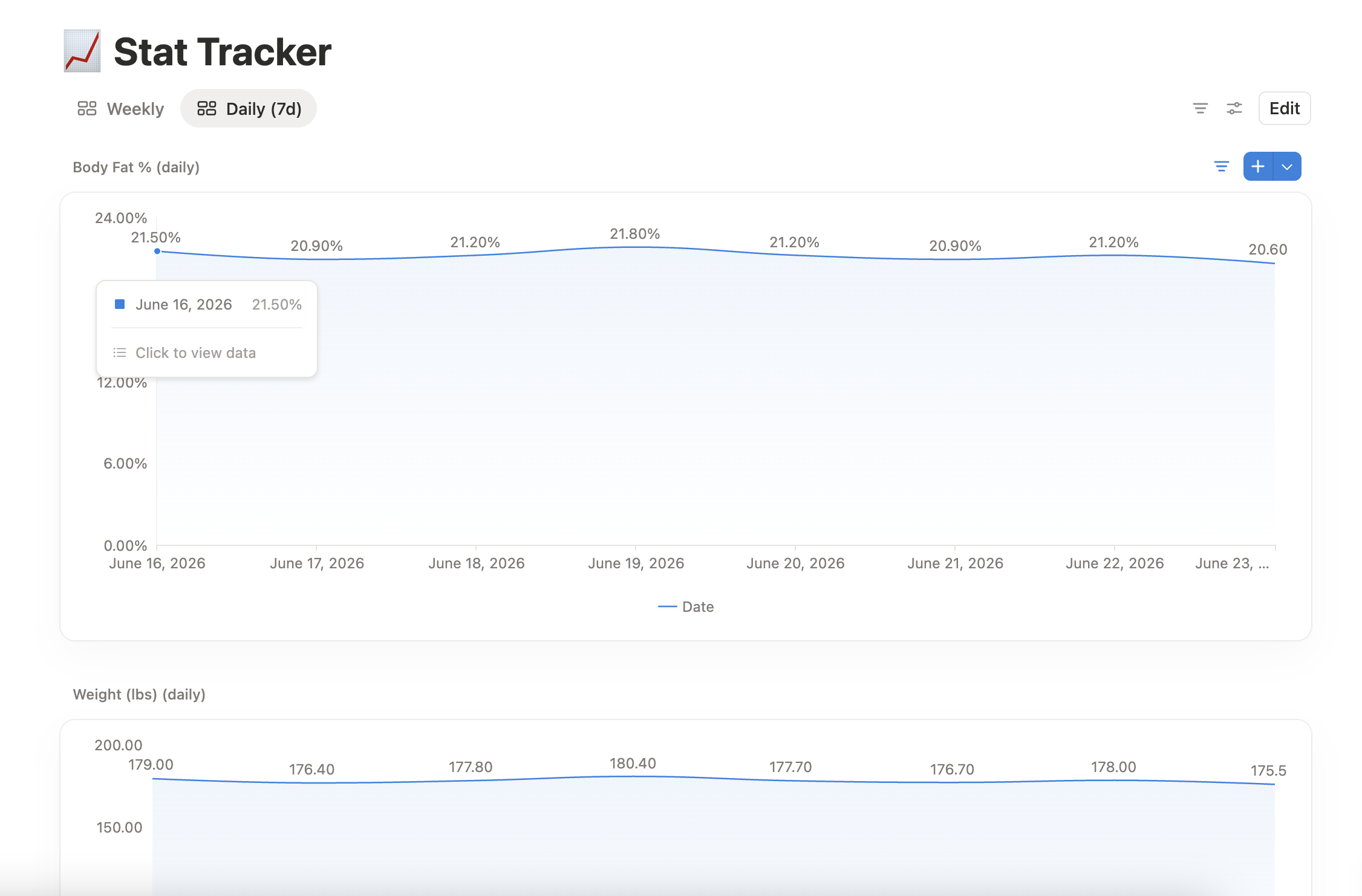
What I like about this setup is not that it feels futuristic. It is that each part has a narrow responsibility. Renpho handles the weigh-in. Apple Health holds movement data. ChatGPT acts as the visual observer. Claude compresses the observations into something easier to keep. Notion becomes the memory layer.
That separation made the system easier to trust.
It also made the design lesson clearer. A lot of useful AI products are not one magical model doing everything. They are smaller behaviors chained together in a way that lowers effort and preserves context.
What it cost
The real cost was less financial than operational.
You need the right hardware, which for me meant a smart scale that was open enough to work with the rest of the system. I chose Renpho for that reason. I also relied on Apple Health, Notion, and AI tools that were already part of my workflow.
The bigger cost was setup time. It took about two days to troubleshoot the flow and make sure the right data was populating correctly. That included getting the shortcuts to behave, validating the handoff into Notion, and making sure the system was dependable enough that it would not quietly fail in the background.
That kind of work is easy to underestimate. A lot of personal systems fail because they are technically possible but operationally annoying. If a tool saves time but creates uncertainty about whether it is working, it has not really reduced friction. It has just moved the friction somewhere else.
What I learned
The main thing I learned is that automation is not really about efficiency. It is about preserving mental bandwidth.
Manual tracking asks for a lot more than a few minutes here and there. It asks you to remember, compare, interpret, and follow through, even on the days when your brain is already full. That is why small tasks become expensive. Not because they are difficult, but because they arrive at the exact moment when you have the least room for them.
That is where this system started to feel useful. Not because it made me perfect. Not because it turned health into a dashboard. But because it lowered the amount of self-management required to stay honest. It gave me a more stable baseline, both literally and mentally.
That is probably the broader thing I am interested in with AI right now. The most compelling use cases are not always the ones that generate the most output. Sometimes the better use case is building something that quietly reduces the number of decisions you have to make in order to keep going.