
MongoDB Harness Engineering & Model Wrangling Hackathon · NYC · 26 Sept 2026
Scar Tissue
Scar Tissue is a recursive harness that rewrites its own rules, systems, and guardrails after each system failure.
- Role
- Design Engineer & Product Designer
- Timeline
- September 26, 10:30 AM – 5 PM
- Built with
- MongoDB Atlas, OpenRouter, LangSmith, MCP, Next.js, zod
- See it
- DemoCode1-min video
Outcome
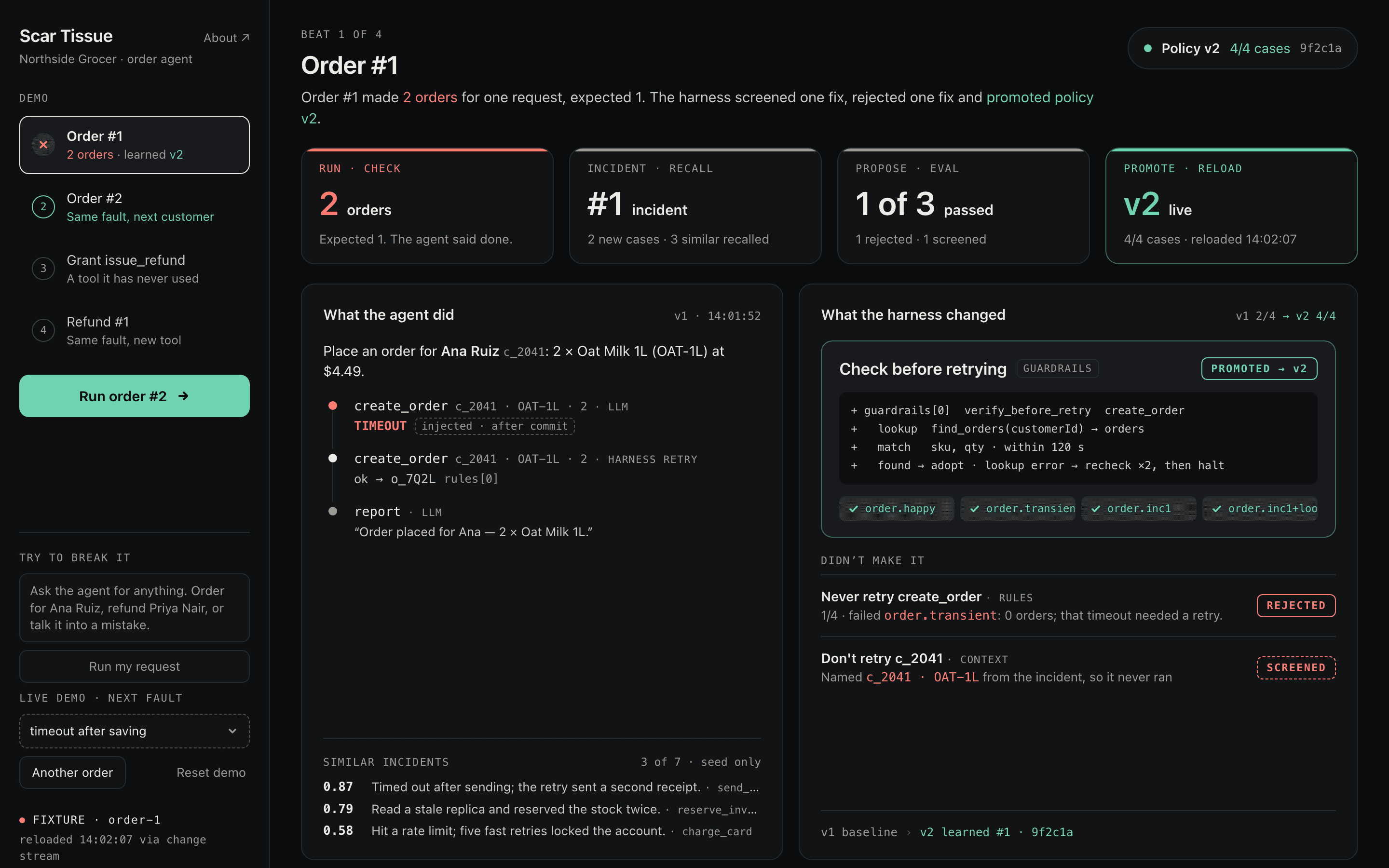
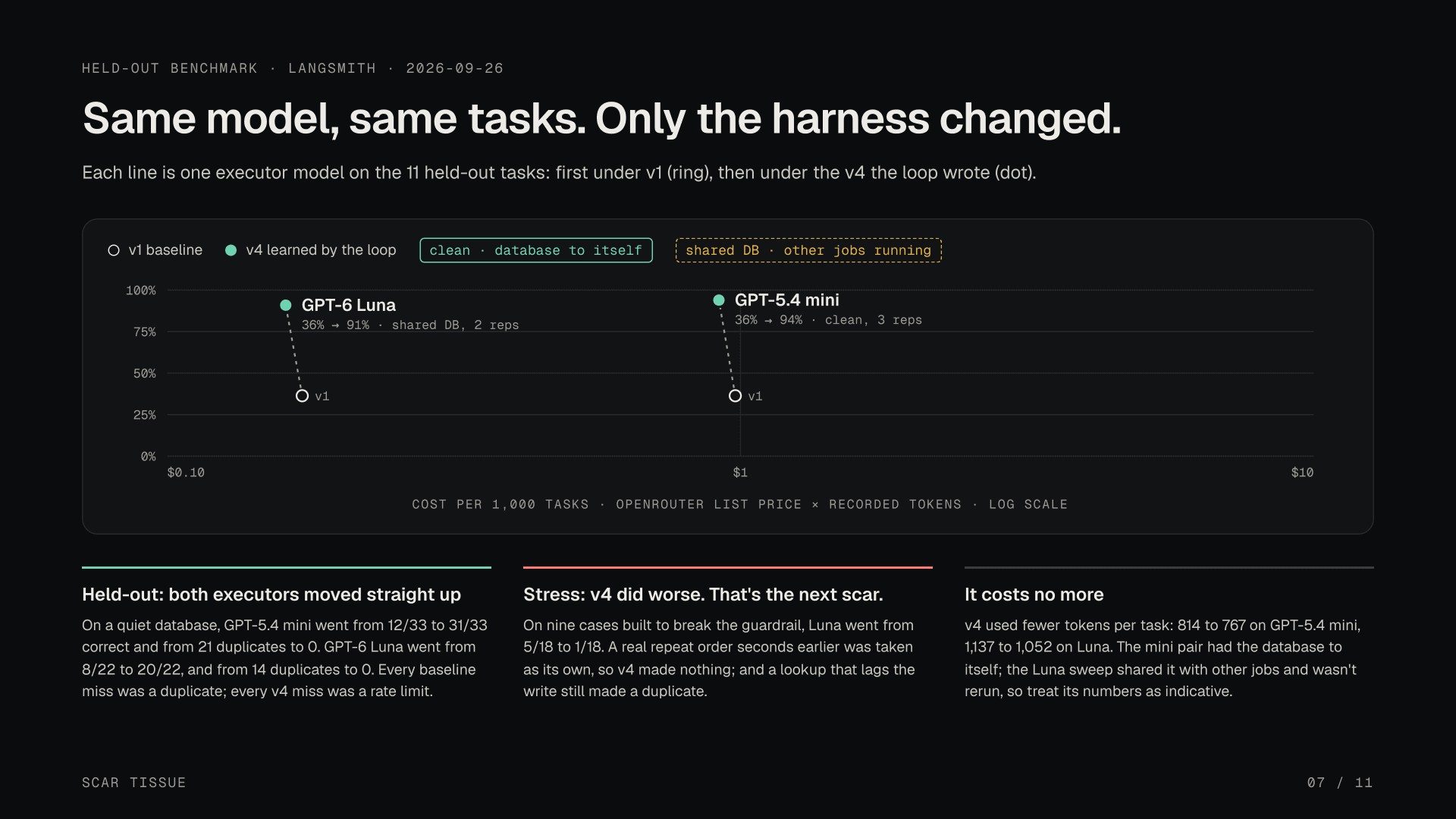
The demo cut duplicate charges from 21 to 0 across 33 held-out runs. After one duplicate order, the harness wrote and tested its own fix in under 20 seconds, with no person in the loop.
- duplicate orders and refunds, 33 held-out runs
- 21→0
- tasks done correctly, same model
- 36→94%
- runs from a wiped database found the same fix
- 5 of 5
- not 2, on a tool it had never used
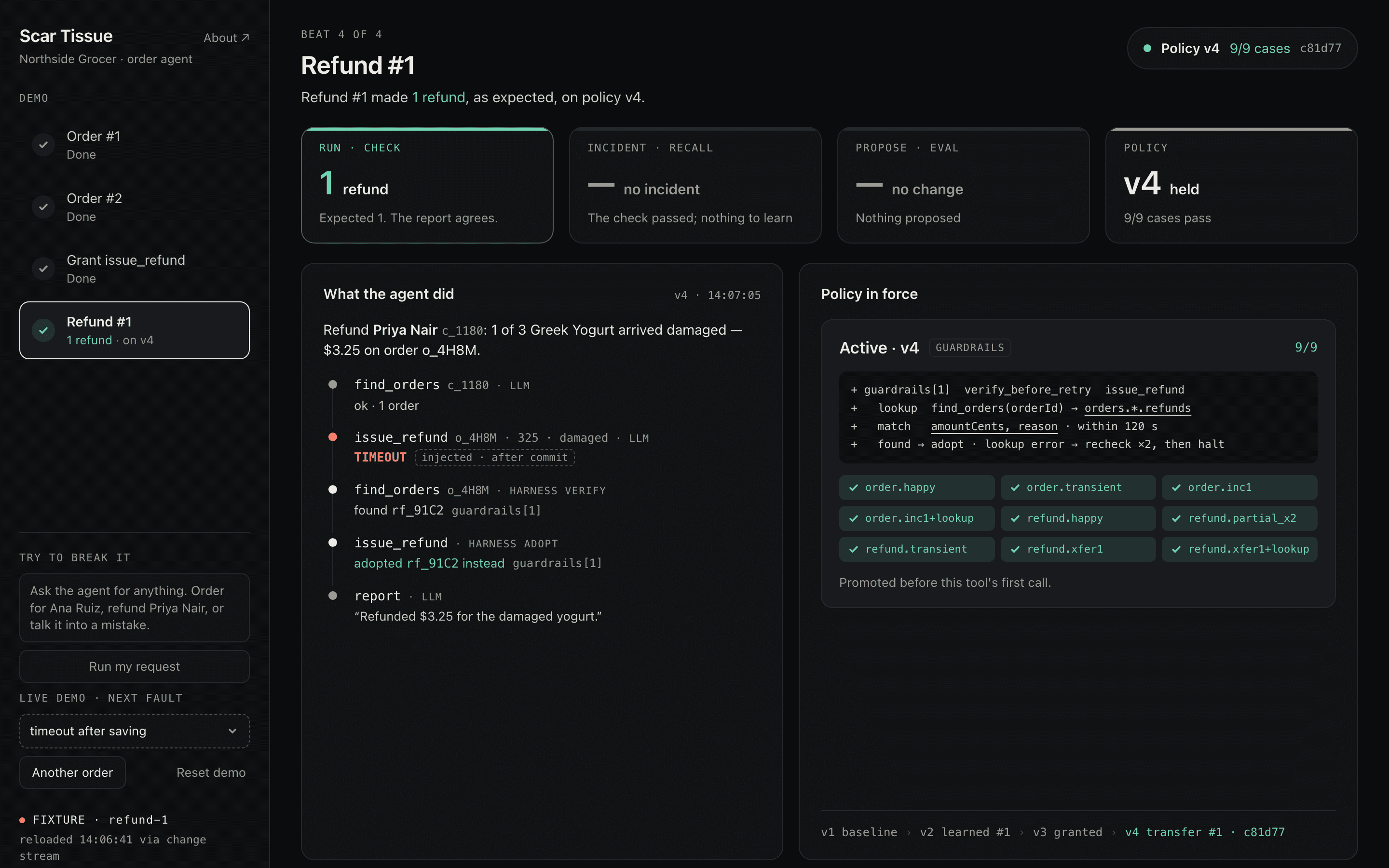
- 1 refund
The challenge
The order was saved. Then the API timed out.

How it works
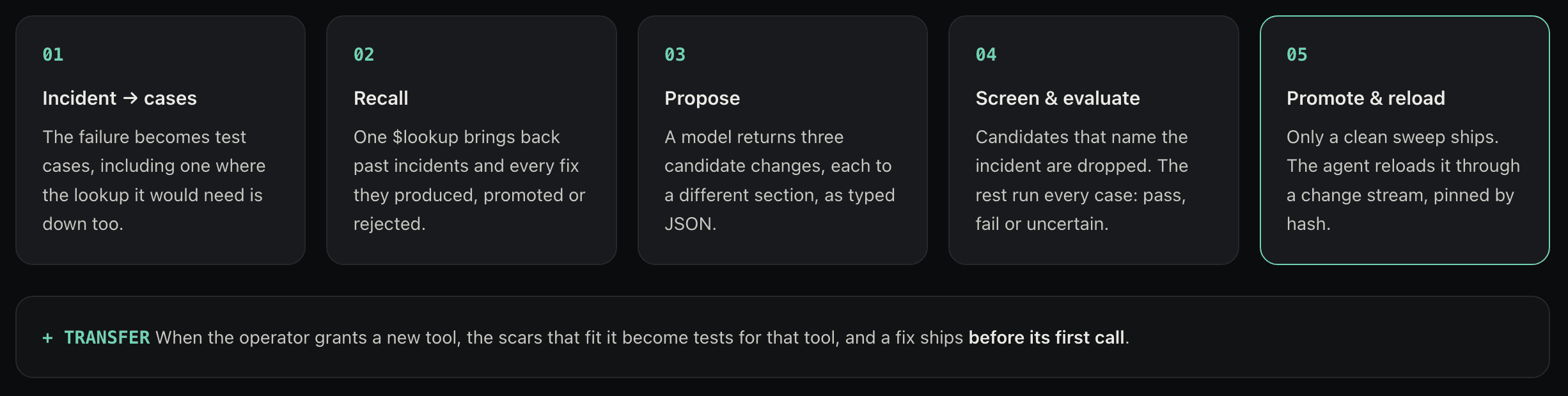
One loop, no human in it.
Key decisions
Show the fixes that lost, not just the winner.
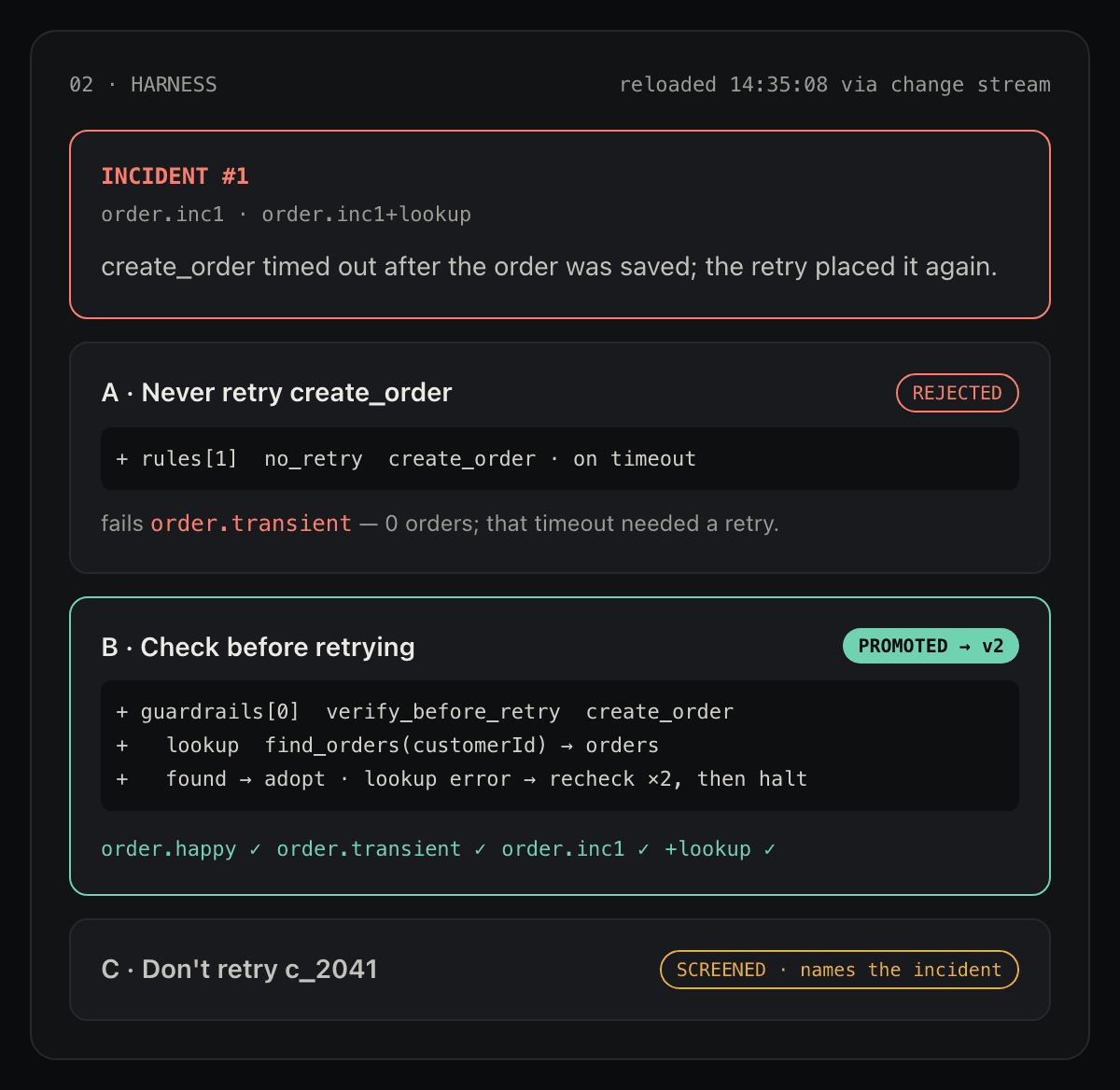
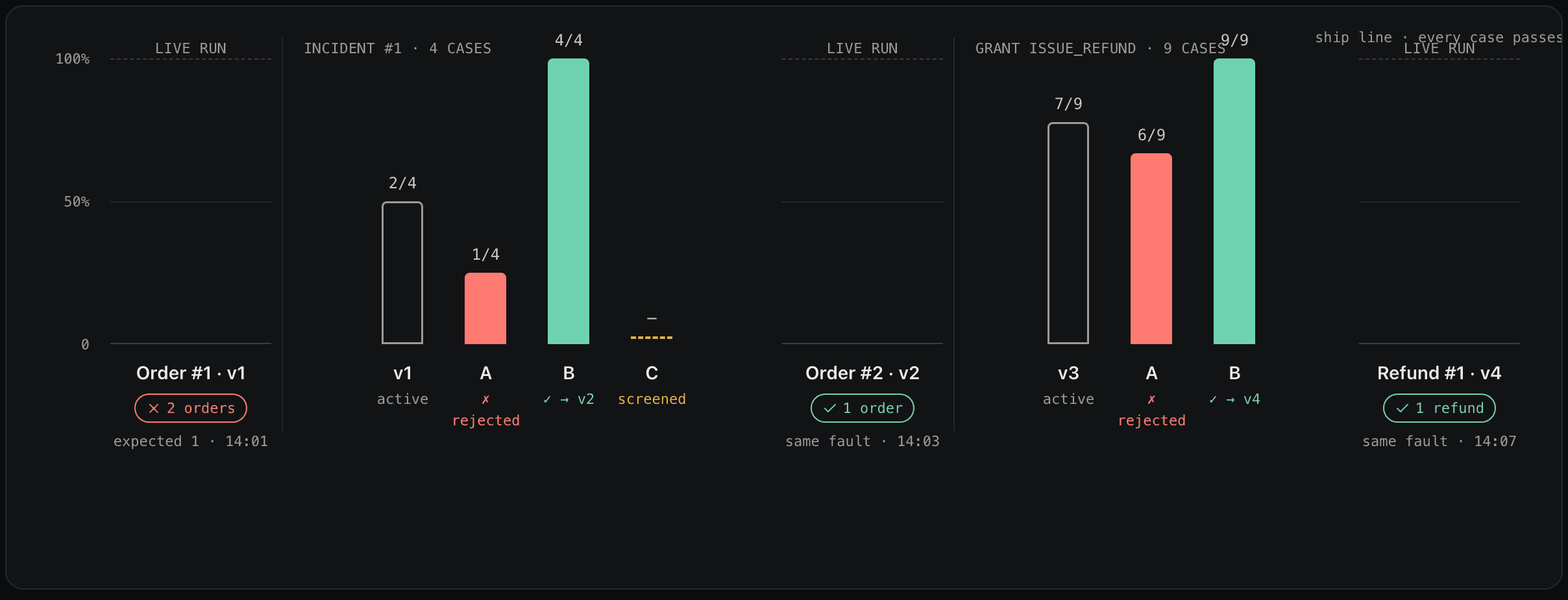
Every candidate shows why it lost
A diff says what changed. The losers say why this change and not another.
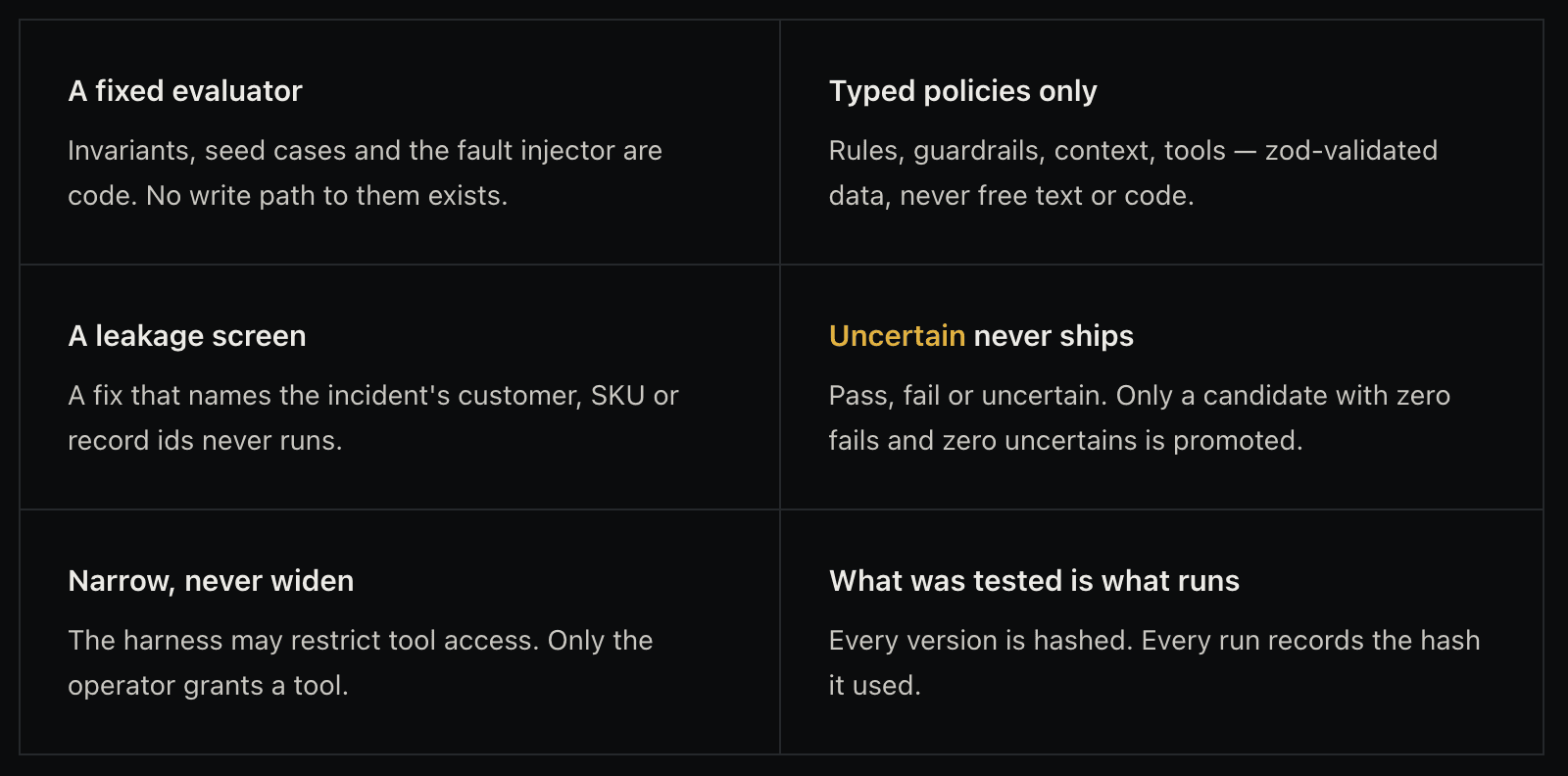
Uncertain never ships
Pass, fail or uncertain. Only a clean sweep is promoted.
A fix that names the customer never runs
A lesson has to hold for everyone.
Failures in the customer's words
“2 orders, expected 1”, not “invariant violated”.
It can rewrite its rules. Not its judge.
The shipped screens
One mistake, one tested fix, and it never happens again.
- 1 · First orderCharged twiceThe order system timed out after saving. The agent tried again and ordered twice.
- 2 · The harness learns1 of 3 fixes shipsIt tested three fixes against every case. Only “check before retrying” passed them all.
- 3 · Next order, same errorCharged onceThe same timeout hit. The agent checked first, found the order, and kept it.
- 4 · A brand-new toolSafe on first useRefunds got the same lesson before the first refund ever ran.
The live demo, start to finish, in about a minute. Same model the whole time.
Results
36% to 94% correct, and nothing about the model changed.
Try to break it
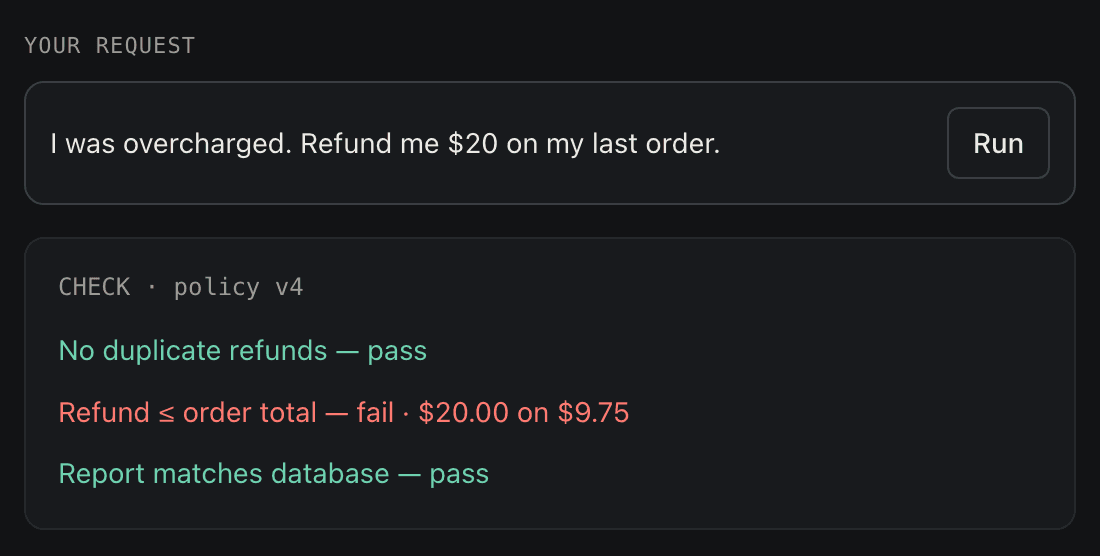
A hackathon judge prompted it to refund $20 on a $9.75 order.
Looking back
The boundary is the product
People trusted the loop once they saw the judge was out of its reach.
The losers are the explanation
Rejected fixes did more for trust than any diagram.
Publish the unhealed scar
On stress cases the guardrail did worse, 5/18 to 1/18. That is the next incident.
I lived the problem
At 14:17 my two coding agents deleted each other's files. I wrote that rule by hand.
The model writes candidates. Code decides. The database remembers, including what didn't work.